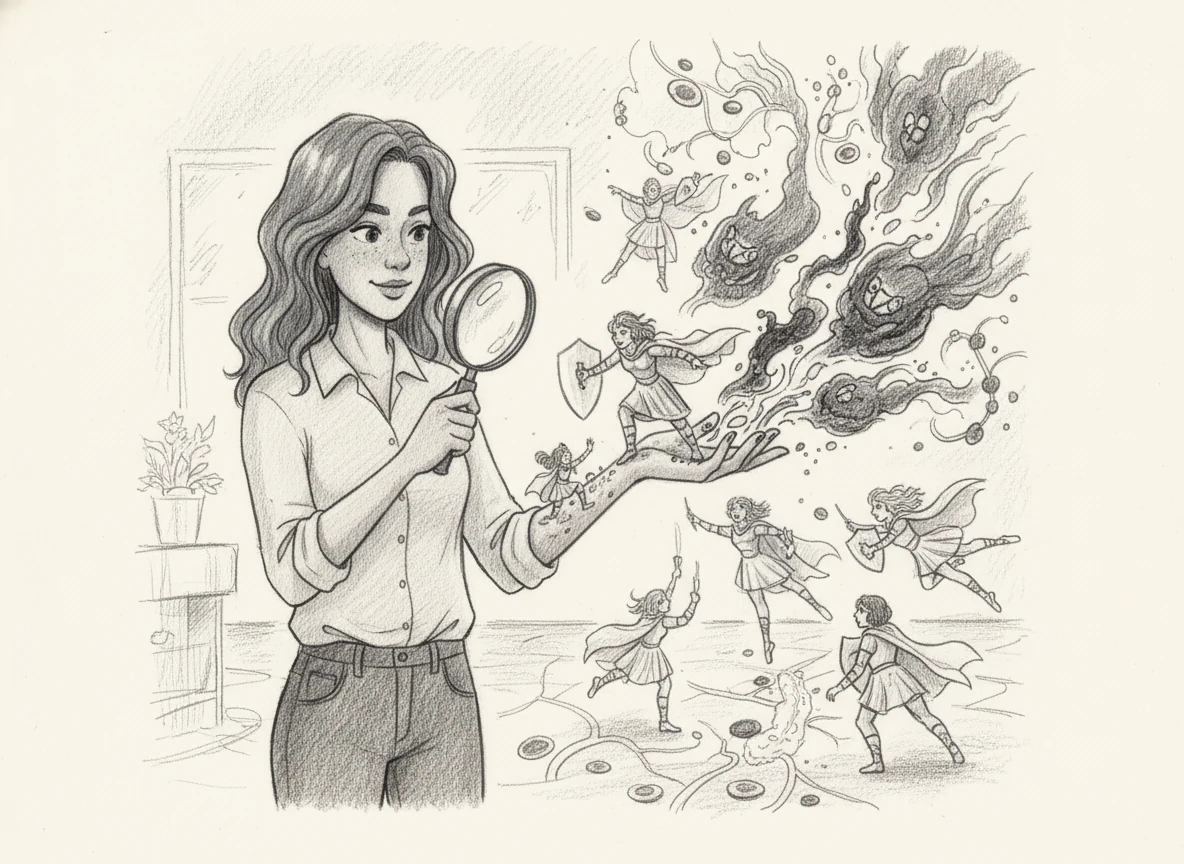
Step inside the microscopic world of the human body to witness the breathtaking ballet of healing. This beautifully illustrated story follows the invisible heroes who work tirelessly to mend every wound, revealing the incredible strength and precision hidden beneath our skin.
BOX 1 — INJURY Text: Alex gets a paper cut that damages a blood vessel. Blood begins to escape and collagen fibers in the vessel wall are exposed. Drawing idea: Finger with a cut and a zoom-in of the broken blood vessel. BOX 2 — VASCULAR SPASM BEGINS Text: The damaged blood vessel releases proteins and chemical signals. These signals cause the smooth muscle in the vessel wall to contract. Drawing idea: Blood vessel starting to tighten. BOX 3 — VASCULAR SPASM PURPOSE Text: The vascular spasm narrows the blood vessel, which slows blood flow and reduces blood loss. Drawing idea: Blood vessel squeezed smaller with fewer blood cells escaping. BOX 4 — PLATELETS ARRIVE Text: The injury exposes collagen fibers. Von Willebrand factor helps platelets stick to the exposed collagen at the injury site. Drawing idea: Platelets attaching to collagen like glue. BOX 5 — PLATELET ACTIVATION Text: The platelets become activated, change shape, and release chemicals that activate more platelets. Drawing idea: Round platelets turning spiky and calling others. BOX 6 — PLATELET PLUG Text: Many activated platelets stick together to form a platelet plug, which temporarily seals the break in the vessel. Drawing idea: Cluster of platelets blocking the hole. BOX 7 — COAGULATION Text: Clotting factors (proteins) activate each other in a cascade, producing fibrin threads. The fibrin forms a strong mesh that traps platelets and red blood cells, creating a long-lasting clot while the vessel heals. Drawing idea: A fibrin net over platelets and red blood cells.